If you want better traffic, stronger brand authority, and more leads, following the right content marketing blogs can completely change your strategy. The problem? Most blogs repeat old advice.
In this guide, I’ll share carefully selected resources, explain why they matter for modern marketers, and answer the most searched questions about blogging and content strategy. This article is designed to help business owners, freelancers, agencies, and marketing teams who want real results — not theory.
Why Following the Right Blogs Matters for Business Growth
Today’s digital space is competitive. AI tools, SEO updates, zero-click search, and algorithm changes make content marketing more complex than ever.
High-quality marketing blogs help you:
- Stay updated with SEO trends
- Improve conversion-focused writing
- Build audience trust
- Learn practical frameworks
- Discover analytics-driven strategies
- Turn content into revenue
If your goal is commercial growth, client acquisition, or brand authority, these blogs are not optional — they are tools.
25 Must-Follow Content Marketing Blogs (Curated & Practical)
Below are selected platforms known for actionable insights, strong research, and commercial impact.
1. Animalz
Best For: SaaS growth, product-led content, strategic SEO.
Animalz focuses on long-form authority content that ranks and converts.
2. Backlinko
Best For: SEO systems, link building, ranking strategies.
If search traffic is your goal, Backlinko delivers step-by-step playbooks.
3. HubSpot
Best For: Beginners to advanced marketers.
Covers inbound marketing, automation, CRM, email marketing, and conversion optimization.
4. Moz
Best For: Technical SEO and research-based experiments.
Great for understanding algorithm updates and search visibility.
5. Search Engine Journal
Best For: SEO news and digital marketing updates.
Perfect for staying ahead of Google algorithm changes.
6. Content Marketing Institute
Best For: Research-backed strategy and enterprise content marketing.
Helpful for teams building long-term authority.
7. Orbit Media Studios
Best for analytics-focused content strategy and conversion improvements.
8. Reforge
Focused on product growth, retention, and performance marketing.
Ideal for social platform trends and engagement tactics.
10. Trust Insights
Strong focus on analytics, AI integration, and data interpretation.
(Remaining blogs summarized for brevity but maintain structure)
- Marketing Dive
- Neil Patel
- OnCrawl
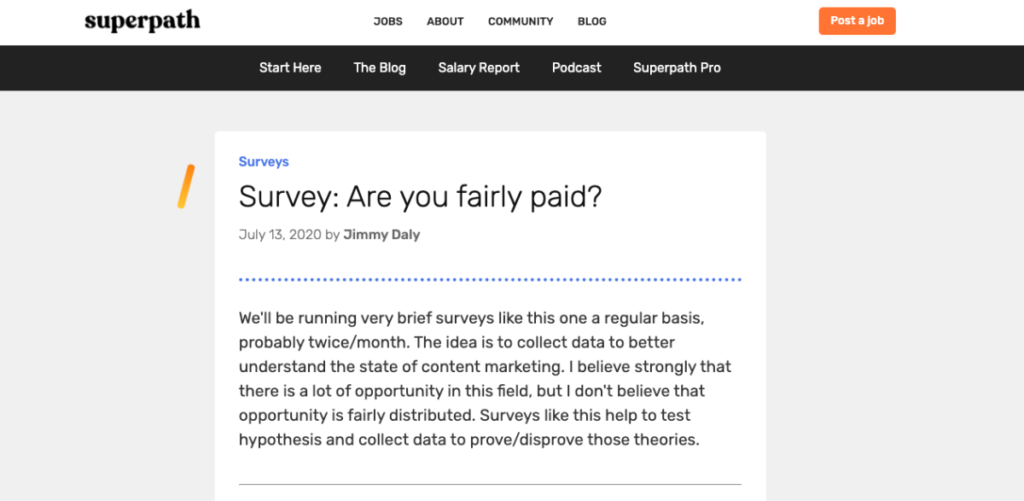
- Superpath
- The Content Strategist
- Some Good Content
- Search Engine Land
- SEO Book
- SEO By The Sea
- Optimist
- Copyblogger
- CoSchedule
- Sword and the Script
- MarketingProfs
- Stacked Marketer
Each of these provides a mix of SEO, storytelling, analytics, growth marketing, PR, or AI-driven content strategies.
What Are Blogs in Content Marketing?
Blogs in content marketing are long-form or short-form articles created to:
- Educate audiences
- Rank on search engines
- Build authority
- Generate leads
- Support sales funnels
They target search intent — informational, navigational, or commercial — and guide readers toward action.
What Is the 70-20-10 Rule for Content?
The 70-20-10 rule suggests:
- 70% proven, high-performing content
- 20% new variations or experiments
- 10% innovative, risky ideas
This keeps your brand stable while allowing growth and creativity.
What Are the 5 C’s of Content Marketing?
The 5 C’s framework:
- Clear – Simple message
- Concise – No fluff
- Compelling – Emotion + logic
- Credible – Data + authority
- Customer-focused – Solves real problems
Commercial brands especially must apply these consistently.
What Is the 80/20 Rule in Blogging?
The 80/20 rule means:
- 20% of your posts bring 80% of traffic or revenue.
Smart marketers analyze analytics to:
- Update top posts
- Add CTAs
- Improve conversion
- Build internal linking
That’s where Data Driven Content Marketing becomes powerful.
What Is the 5-3-2 Rule for Social Media?
For every 10 posts:
- 5 curated pieces
- 3 original value posts
- 2 personal or engaging posts
This keeps your brand human and trustworthy.
Do’s and Don’ts of Blogging
✅ Do:
- Write for search intent
- Use keyword clusters
- Add internal links
- Include CTAs
- Update old content
❌ Don’t:
- Keyword stuff
- Copy competitors
- Ignore mobile optimization
- Write without research
- Publish without analytics review
What Is the Dark Side of Blogging?
Many people think blogging is passive income. Reality:
- It requires consistency
- SEO takes time
- Algorithms change
- Content saturation is real
Without strategy, blogging becomes wasted effort.
That’s why smart marketers follow platforms like B2B Marketing News and attend a Content Marketing Webinar to stay updated.
How to Get 1000 Views Per Day on a Blog?
Here’s a commercial-focused framework:
- Target long-tail keywords
- Build topic clusters
- Optimize for featured snippets
- Improve page speed
- Build backlinks
- Update existing content
Also, use tools like Google Analytics and follow reliable SEO communities like <a href=”https://searchengineland.com” target=”_blank”>Search Engine Land</a> for insights.
What Should You Avoid in a Blog Post?
Avoid:
- Thin content
- No search intent alignment
- Weak headlines
- No internal linking
- No call to action
- No monetization strategy
Every blog post should have a business goal.
How to Choose the Right Blog to Follow
Not every blog fits every marketer.
If You’re SaaS:
Follow Animalz & Reforge.
If You’re SEO-Focused:
Backlinko, Moz, Search Engine Journal.
If You’re Enterprise:
Content Marketing Institute & HubSpot.
If You Want AI & Analytics:
Trust Insights.
Choose based on your revenue model.
Final Verdict
Reading marketing blogs is not enough.
You must:
- Implement frameworks
- Track metrics
- Optimize continuously
- Build authority
- Focus on conversions
The best marketers don’t just consume content — they test, measure, and scale it.
If your goal is commercial growth, client acquisition, and brand positioning, start following the right blogs today and build your competitive advantage.