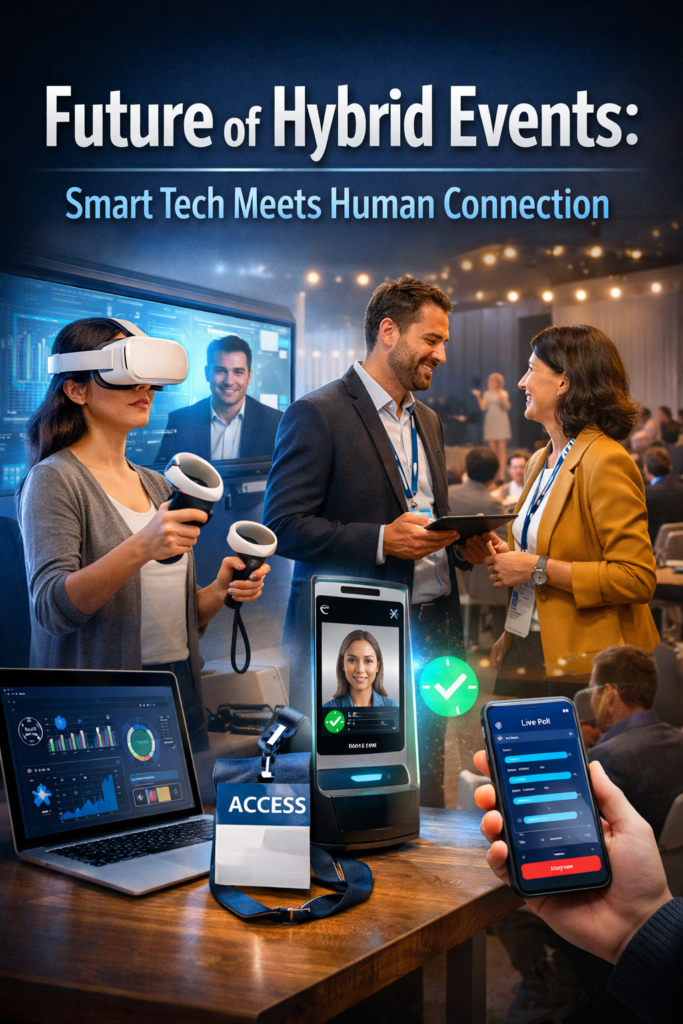
Future of hybrid events is no longer just about combining online and in-person audiences. In 2025 and beyond, it is about creating experiences where technology enhances human interaction instead of replacing it. Businesses, marketers, and event organizers are now using event technology, virtual engagement tools, AI-driven personalization, and data analytics to create deeper connections with attendees.
At the same time, successful events still rely on human-centered design, meaningful networking, and authentic conversations. When organizers balance digital innovation, attendee engagement, and hybrid event platforms, they unlock powerful opportunities for brands and communities.
This guide explains how hybrid events are evolving, what advantages they offer, and why they will shape the future of conferences, webinars, and digital marketing.
Table of Contents
Why Hybrid Events Are Growing Fast
Hybrid events became popular during the pandemic, but they are now a permanent part of the event industry. Companies discovered that combining physical experiences with virtual participation dramatically increases reach and engagement.
Today, organizations can host events where attendees join from anywhere while still allowing in-person networking.
Some reasons hybrid events continue to grow include:
- Global accessibility for remote participants
- Lower travel costs for attendees
- Higher engagement through digital tools
- Better data insights from online platforms
Industry data also supports this trend. According to reports, 49% of event professionals prefer hybrid formats because they allow organizers to combine physical interaction with digital scale.
Hybrid events are not simply temporary solutions anymore—they represent a new model for the event industry.
What Are the Advantages of Hybrid Events?
Hybrid events offer several advantages that traditional events cannot match. By combining the strengths of both formats, they deliver more flexibility and better engagement.
1. Wider Audience Reach
A physical event can only host a limited number of attendees. Hybrid events remove that barrier.
Virtual attendees from different countries can join sessions, watch keynote speakers, and interact with exhibitors.
This is especially helpful for industries like technology, manufacturing, and digital marketing that serve global audiences.
Many companies working with b2b marketing agencies usa manufacturing are already using hybrid conferences to connect with buyers and partners worldwide.
2. Higher Engagement Through Technology
Hybrid events use tools like:
- live polling
- real-time chat
- audience Q&A
- gamification
These features keep attendees involved instead of passively watching presentations.
When used correctly, interactive event platforms, digital networking tools, and live engagement features can significantly improve participation.
3. More Valuable Data Insights
One of the biggest advantages of hybrid events is data.
Organizers can track:
- session popularity
- attendee behavior
- networking activity
- content engagement
These data-driven insights, event analytics, and attendee behavior tracking tools help organizers improve future events.
Companies can even use this information to understand customer interests and how to create demand through better marketing strategies.
4. Cost Efficiency
Travel, accommodation, and venue costs are major expenses for traditional events.
Hybrid events reduce these costs by allowing many participants to attend virtually.
Organizations can allocate budgets toward content quality, speaker experiences, and digital engagement tools instead.
5. Better Accessibility
Hybrid events make events accessible for people who cannot travel due to:
- financial limitations
- health issues
- time constraints
- geographic distance
By offering on-demand sessions, live streaming, and virtual networking spaces, events become more inclusive.
What Is the Future of Events?
The event industry is evolving quickly, and technology is driving most of the change.
The future of events will focus on three key elements:
- Immersive experiences
- AI-driven personalization
- human-centered interaction
Immersive Technology
Technologies like Augmented Reality (AR) and Virtual Reality (VR) are transforming how people experience events.
Attendees can explore virtual booths, watch product demos, and interact with speakers inside digital environments.
Experts predict that immersive platforms may reach 3.7 billion users globally in the coming years.
This massive growth shows that immersive digital experiences will play a huge role in event engagement.
AI-Powered Personalization
Artificial intelligence is helping event organizers deliver customized experiences.
AI can recommend:
- sessions based on interests
- networking opportunities
- exhibitors relevant to attendees
These AI event recommendations, smart event apps, and automated networking tools make events more valuable for participants.
Real-Time Analytics
Modern hybrid events rely heavily on analytics.
Organizers can monitor engagement levels in real time and make adjustments during the event.
For example, if a session has low participation, organizers can promote it to relevant audiences instantly.
These real-time event analytics, predictive insights, and data-driven planning strategies help improve event outcomes.
What Are the 5 C’s of an Event?
Successful events usually follow five key principles known as the 5 C’s of event planning.
1. Concept
The concept defines the event’s purpose and theme.
Organizers must decide:
- target audience
- event goals
- key topics
A clear concept ensures the event delivers value to attendees.
2. Coordination
Coordination involves managing vendors, speakers, marketing teams, and technology providers.
Good coordination ensures smooth operations before and during the event.
3. Control
Control refers to managing budgets, timelines, and logistics.
Effective event project management, budget planning, and resource allocation keep the event running smoothly.
4. Culmination
Culmination is the actual event experience.
This includes:
- keynote presentations
- networking sessions
- workshops
- interactive activities
A successful culmination leaves attendees satisfied and inspired.
5. Closeout
After the event ends, organizers evaluate results.
They analyze:
- attendee feedback
- engagement metrics
- return on investment
These insights help improve future events and marketing strategies.
What Is the Future of Webinars?
Webinars are evolving rapidly and becoming more interactive.
Traditional one-way presentations are being replaced with interactive webinars, live collaboration tools, and AI-powered engagement platforms.
Future webinars will include:
- real-time audience interaction
- breakout networking rooms
- personalized learning paths
- immersive presentation formats
Many organizations also integrate webinars into their content marketing strategy.
Webinars are now powerful tools for education, brand awareness, and lead generation.
Professionals often follow industry insights from B2B Marketing News to stay updated on new webinar strategies and technologies.
Are Webinars Profitable?
Yes, webinars can be highly profitable when executed correctly.
Businesses use webinars to:
- generate leads
- promote products
- educate customers
- build authority in their industry
Revenue opportunities from webinars include:
- paid registrations
- sponsorships
- product promotions
- consulting services
A well-planned webinar with strong content can generate significant returns.
Experts like Khurram Shahzad, who work in digital marketing and event strategy, often highlight webinars as one of the most cost-effective marketing tools for businesses.
Where Will Digital Marketing Be in 5 Years?
Digital marketing will become even more personalized and data-driven.
Several trends are expected to shape the next five years.
AI-Driven Marketing
Artificial intelligence will automate content recommendations, ad targeting, and customer engagement.
Hybrid Experiences
Brands will combine physical events, virtual events, and online communities to create ongoing engagement.
Voice and Conversational Marketing
Voice assistants and chatbots will play a larger role in customer interactions.
Data Privacy and Trust
Consumers will expect stronger protection for their personal information.
Businesses that prioritize ethical data usage, privacy protection, and transparent marketing practices will build stronger relationships with audiences.
FAQs
Q: How do hybrid events ensure equal engagement for in-person and remote attendees?
Hybrid events use a variety of interactive engagement tools, live streaming platforms, and virtual networking systems to ensure both audiences participate equally.
For example, organizers often provide:
real-time Q&A sessions
live polling tools
moderated chat discussions
virtual breakout rooms
These tools allow remote participants to ask questions, interact with speakers, and collaborate with other attendees just like those attending physically.
Additionally, many platforms integrate AI-powered networking recommendations, helping attendees connect with people who share similar interests or professional goals.
When events are designed using human-centered event planning principles, both in-person and virtual participants receive the same level of attention and engagement.
Q: What role does data privacy play in hybrid events?
Data privacy is critical for maintaining trust between organizers and attendees.
Hybrid events collect various types of data such as:
registration information
session participation
networking interactions
engagement metrics
To protect this information, organizers must implement secure event platforms, encrypted data systems, and privacy compliance frameworks like GDPR.
Transparent policies also help attendees understand how their data will be used.
Prioritizing digital security, data protection practices, and ethical data management ensures attendees feel comfortable participating in hybrid events.
Q: How can event organizers measure success in hybrid events?
Success in hybrid events is measured using multiple metrics.
Organizers typically evaluate:
attendee registration numbers
session engagement rates
networking interactions
content downloads
audience feedback
Advanced event analytics platforms, engagement tracking tools, and performance dashboards provide detailed insights into these metrics.
By analyzing this data, organizers can determine which sessions performed best and identify areas for improvement.
This data-driven approach allows companies to improve future events and create more engaging experiences for attendees.
Conclusion
Future of hybrid events will revolve around combining advanced technology with genuine human interaction. Instead of replacing traditional experiences, digital tools are enhancing them.
With the help of AI-powered personalization, immersive event technology, real-time analytics, and virtual engagement platforms, hybrid events can reach larger audiences while maintaining meaningful connections.
As businesses continue to adopt hybrid strategies, events will become more inclusive, interactive, and data-driven. Organizations that embrace these innovations today will be better positioned to deliver impactful experiences and build stronger communities tomorrow.