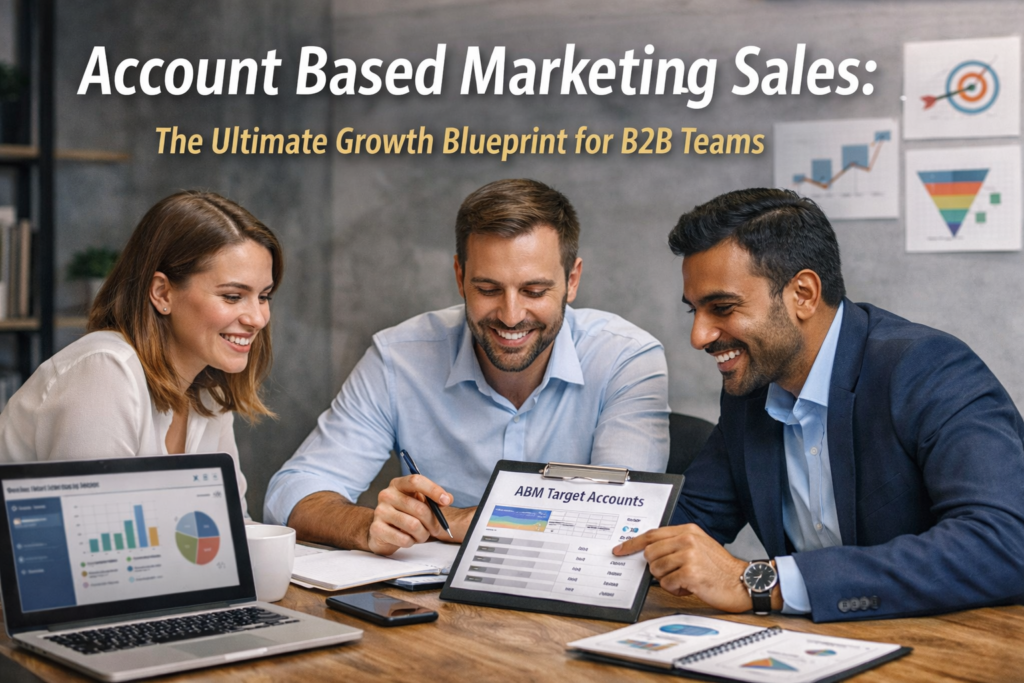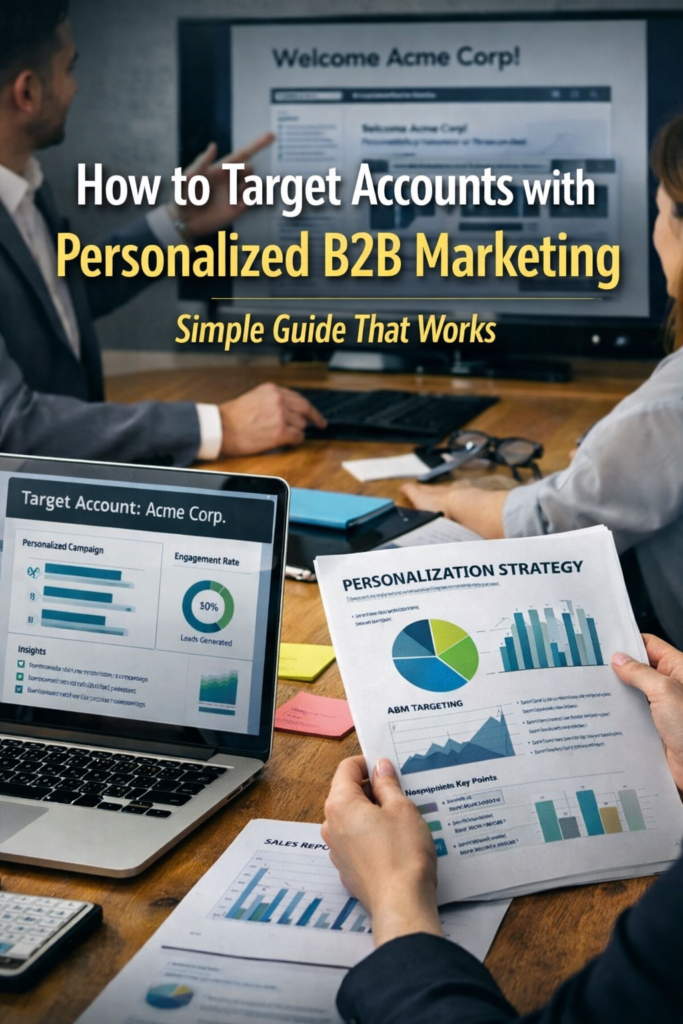
How to target accounts with personalized B2B marketing is one of the most effective strategies modern companies use to connect with high-value buyers. Instead of sending the same message to everyone, businesses now rely on Account-Based Marketing (ABM), buyer intent data, customer segmentation, and personalized outreach to build meaningful relationships with decision-makers.
Today’s B2B buyers expect content that speaks directly to their needs, industry, and problems. When companies use smart personalization, they improve lead generation, boost conversion rates, and shorten the sales pipeline.
In this guide, you’ll learn practical ways to personalize B2B campaigns, reach the right accounts, and turn potential prospects into long-term customers.
Table of Contents
Why Personalized B2B Marketing Matters for Target Accounts
Traditional B2B marketing often focuses on broad campaigns. While this approach generates visibility, it rarely speaks directly to the decision-makers who control budgets.
Personalized B2B marketing changes that by focusing on specific companies and the people inside them.
Key Benefits
- Higher engagement: Personalized messaging gets more responses from prospects.
- Better conversion rates: Relevant content increases trust and purchase intent.
- Stronger relationships: Tailored communication shows you understand your buyer.
- Improved ROI: Marketing resources are spent on high-value accounts instead of random audiences.
Companies that focus on personalized outreach often outperform competitors who rely on generic marketing messages.
Identify and Prioritize the Right Accounts
Successful personalized marketing begins with selecting the right accounts. Not every company should be treated as a high-value target.
Steps to Identify Ideal Accounts
1. Define Your Ideal Customer Profile (ICP)
An Ideal Customer Profile includes companies that benefit the most from your product or service.
Common ICP criteria include:
- Industry
- Company size
- Revenue range
- Technology stack
- Geographic location
2. Use Data and Research
Marketing teams should analyze:
- CRM data
- Website visitor insights
- Intent data platforms
- LinkedIn company research
These insights help identify organizations already showing buying signals.
3. Align Sales and Marketing Teams
Both teams must agree on which accounts deserve focus. When marketing and sales collaborate, outreach becomes more strategic and consistent.
Many companies also collaborate with experts such as b2b marketing agencies usa manufacturing to identify and engage industry-specific accounts more effectively.
Personalize Content for Each Target Account
Once you identify your priority accounts, the next step is creating personalized content that speaks directly to their needs.
Types of Personalized B2B Content
1. Personalized Emails
Customized emails remain one of the most powerful tools in B2B marketing.
Effective personalized emails include:
- Prospect’s company name
- Relevant industry challenges
- Tailored product benefits
Instead of sending generic campaigns, focus on solving a specific problem for that company.
2. Custom Landing Pages
Many B2B marketers now create custom microsites designed specifically for individual accounts.
These microsites may include:
- Company logo
- Personalized messaging
- Industry-specific case studies
- Custom product demonstrations
This approach instantly makes prospects feel that the offer was built specifically for them.
3. Industry-Focused Case Studies
Decision-makers want proof that your solution works. Sharing success stories from similar companies increases credibility and trust.
Use Multi-Channel Personalization Strategies
Modern B2B marketing works best when personalization happens across multiple channels.
Important Channels for Personalized B2B Campaigns
Email Marketing
Email campaigns allow marketers to deliver tailored messages to decision-makers.
Personalization techniques include:
- Dynamic content
- Industry-specific messaging
- Behavioral triggers
LinkedIn Outreach
LinkedIn is one of the best platforms for connecting with executives and business leaders.
Marketers can personalize:
- Direct messages
- Sponsored content
- Conversation ads
Website Personalization
When target accounts visit your website, personalization tools can adjust:
- Headlines
- Offers
- Content blocks
- Calls-to-action
This creates a tailored experience that improves engagement.
Align Marketing Content with the Buyer Journey
B2B buyers move through several stages before making a purchase decision. Personalized marketing must match each stage.
Awareness Stage
At this stage, buyers are learning about their problem.
Effective content includes:
- Educational blog posts
- Industry reports
- Thought leadership articles
Staying updated with platforms like B2B Marketing News can help marketers understand new trends and insights.
Consideration Stage
Prospects now compare different solutions.
Helpful content includes:
- Product comparisons
- Case studies
- Webinars
Decision Stage
Buyers are close to making a purchase.
Personalized content may include:
- Custom demos
- ROI calculators
- Proposal documents
Matching the content to each stage keeps prospects moving through the sales funnel.
Measure the Success of Personalized B2B Campaigns
Personalization must be measurable. Without tracking performance, marketers cannot understand what works.
Important Metrics to Monitor
- Lead engagement rate
- Conversion rate
- Pipeline growth
- Customer acquisition cost
- Average deal size
These metrics reveal whether personalization improves marketing effectiveness.
Many companies also invest in Manual link building services to strengthen domain authority and improve search visibility for their targeted campaigns.
Overcoming Challenges in Scaling Personalization
Although personalization delivers strong results, scaling it across hundreds of accounts can be difficult.
Common Challenges
Data Management
Large datasets can become messy or outdated. Clean CRM data is essential for accurate personalization.
Content Creation
Creating unique content for many accounts takes time and resources.
Technology Integration
Marketing automation tools, CRMs, and analytics platforms must work together to support personalization efforts.
Successful teams often build internal frameworks and processes to simplify campaign creation.
The Future of Personalized B2B Marketing
The future of B2B personalization is driven by data, automation, and artificial intelligence.
Key Trends Shaping the Future
AI-powered personalization
AI tools help marketers analyze data and generate tailored content faster.
Predictive analytics
Companies can predict which accounts are most likely to convert.
Real-time website personalization
Dynamic content adapts instantly based on visitor behavior.
Industry experts like Khurram Shahzad have also highlighted how combining AI insights with account-based strategies can dramatically improve marketing performance.
As technology evolves, personalized marketing will become even more precise and scalable.
Summary
How to target accounts with personalized B2B marketing is no longer optional for companies that want to stay competitive in modern digital markets. By using account-based marketing, customer data insights, targeted content, and multi-channel outreach, businesses can create meaningful connections with high-value prospects.
The key to success lies in identifying the right accounts, delivering personalized content at every stage of the buyer journey, and continuously measuring results. When done correctly, personalized B2B marketing builds stronger relationships, increases conversions, and drives long-term business growth.